Published Works

Books that come from consequence, faith, and truth.

Two books. Two different kinds of fire. One body of work shaped by identity, fatherhood, love, responsibility, and the refusal to live a false life.

The pages below draw from the final manuscript material for Freedom From Self and the third-edition print manuscript for Letters to Lila.

Freedom From Self marketing image

Identity • Discipline • Truth

Freedom From Self: Become Who You Are

This is the book for the person who is exhausted by self-deception, performance, and the quiet violence of living divided against their own soul.

It is direct and spiritually serious. It does not offer slogans. It asks what remains when excuses are stripped away and a life must be rebuilt on truth, discipline, and surrender.

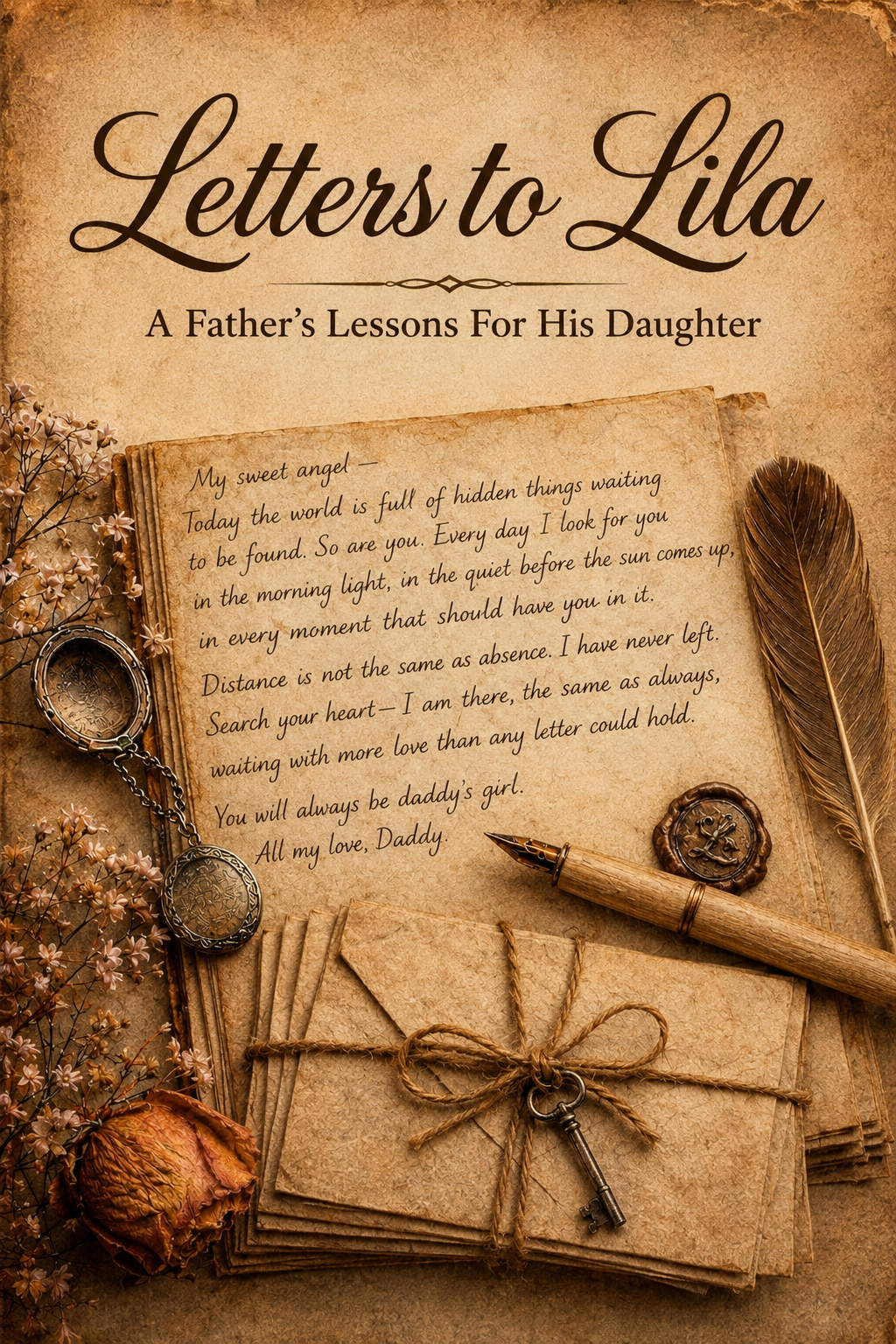
Letters to Lila hardback marketing image

Fatherhood • Love • Legacy

Letters to Lila: A Father's Lessons for a Daughter He Never Stopped Loving

This book was written from separation, grief, love, and the refusal to let distance become the final word between a father and his daughter.

It carries tenderness without sentimentality. It is about what remains of love when a man has lost nearly everything except the duty to leave something true behind.

Sourced Preview • Freedom From Self

A map for dismantling the false self

Source material: final KDP manuscript, Author's Note, Contents, and chapters on the observer effect, fear, honesty, meditation, journaling, and rewiring.

Freedom From Self begins from the floor, not from theory. The book names the false self as the part of a person built from fear, performance, survival patterns, and inherited defenses. Its central movement is not self-improvement in the shallow sense. It is self-examination, surrender, and the disciplined practice of becoming honest enough to live from something deeper.

The manuscript moves through physics, ancient spiritual traditions, the body, nervous-system regulation, fear patterns, attention, surrender, prayer, meditation, journaling, silence, solitude, neuroscience, daily practice, and love. It is both spiritual and practical: the point is not to collect ideas, but to build a life where the gap between stimulus and response becomes wide enough for freedom to enter.

“The gap between the stimulus and your response is where your entire freedom lives.”

Freedom From Self, Chapter 6

The Inner Prison

The early chapters examine identity, the observer, the false self, and the way survival patterns become a prison once they outlive their original purpose.

The Body and Breath

The book treats breath, body awareness, and nervous-system regulation as essential spiritual tools, not side practices or wellness decoration.

Tools That Work

Prayer, meditation, journaling, silence, solitude, honest inventory, and daily repetition become the working practices for rebuilding a life.

Rewiring

The later chapters connect spiritual practice with the neuroscience of change: repetition, emotional engagement, and new responses in old moments.

Sourced Preview • Letters to Lila

A father's record of love, legacy, and truth

Source material: third-edition print manuscript, A Note to the Reader, Prologue, Part One, Part Two lessons, selected letters, and closing pages.

Letters to Lila began as private letters written during separation, grief, and uncertainty. The manuscript is explicit about its origin: when daily fatherhood was interrupted, love still needed somewhere to go. The page became the place where presence could remain when physical access was limited.

The book moves from the story of the letters into sustained lessons on God, identity, integrity, truth, perseverance, and family. It then turns into direct letters on money, work, discipline, decision-making, failure, courage, anger, boundaries, forgiveness, gratitude, beauty, rest, learning, doubt, and ordinary days. It is not only a book for a daughter. It is also for fathers, parents, and anyone trying to leave behind something true.

“This book began as a private act of love.”

Letters to Lila, A Note to the Reader

The War

Part One tells the story of fatherhood under pressure: the arrival of a daughter, separation, sobriety, grief, writing, and the refusal to disappear.

The Lessons

Part Two gives longer teachings on God, identity, integrity, truth, perseverance, and family as the bones of a life worth living.

The Letters

Part Three turns practical: money, work, discipline, courage, anger, boundaries, apology, gratitude, rest, doubt, and ordinary days.

The Legacy

The closing pages make the book's purpose plain: to place love, memory, truth, and a father's voice into his daughter's hands.


What Connects Them

These books do not come from theory

They come from lived consequence. One is written toward the inner war of identity. The other is written toward the ache and responsibility of fatherhood. Both come from the same insistence: truth must cost something or it is not yet truth.

Freedom From Self confronts the false self, the masks, the spiritual numbness, and the discipline required to become honest. Letters to Lila speaks from love under pressure, where faith and fatherhood must remain standing when life has already split open.

How They Work Together

Two different doorways into one body of work

Freedom From Self moves inward

It follows the interior work: fear, performance, old patterns, spiritual numbness, addiction recovery, attention, surrender, and the disciplined practice of becoming honest.

Letters to Lila moves outward

It follows love under pressure: fatherhood, family wounds, legacy, direct letters, forgiveness, grief, and the responsibility to leave behind what matters.

Together they complete the arc

One book works toward freedom from the false self. The other works toward love, duty, family, and the life a person leaves in the hands of someone they love.

Source Grounding

What the expanded page is based on

Freedom From Self

Final KDP manuscript reviewed for the Author's Note, full contents, and chapter material covering the observer effect, fear, patterns, attention, honesty, surrender, prayer, meditation, journaling, solitude, rewiring, daily practice, and love.

Letters to Lila

Third-edition print manuscript reviewed for the reader note, prologue, Part One narrative, Part Two lessons, Part Three selected letters, Part Four closing message, and themes of God, identity, integrity, truth, perseverance, family, gratitude, courage, and legacy.

Complete Collection

Want the wider body of work?

Start with the complete Michael Brandon bundle if you want the books, companion materials, guided practice tools, and audiobook formats in one place.